

Case Study
A Publisher One Person
Can Actually Run.
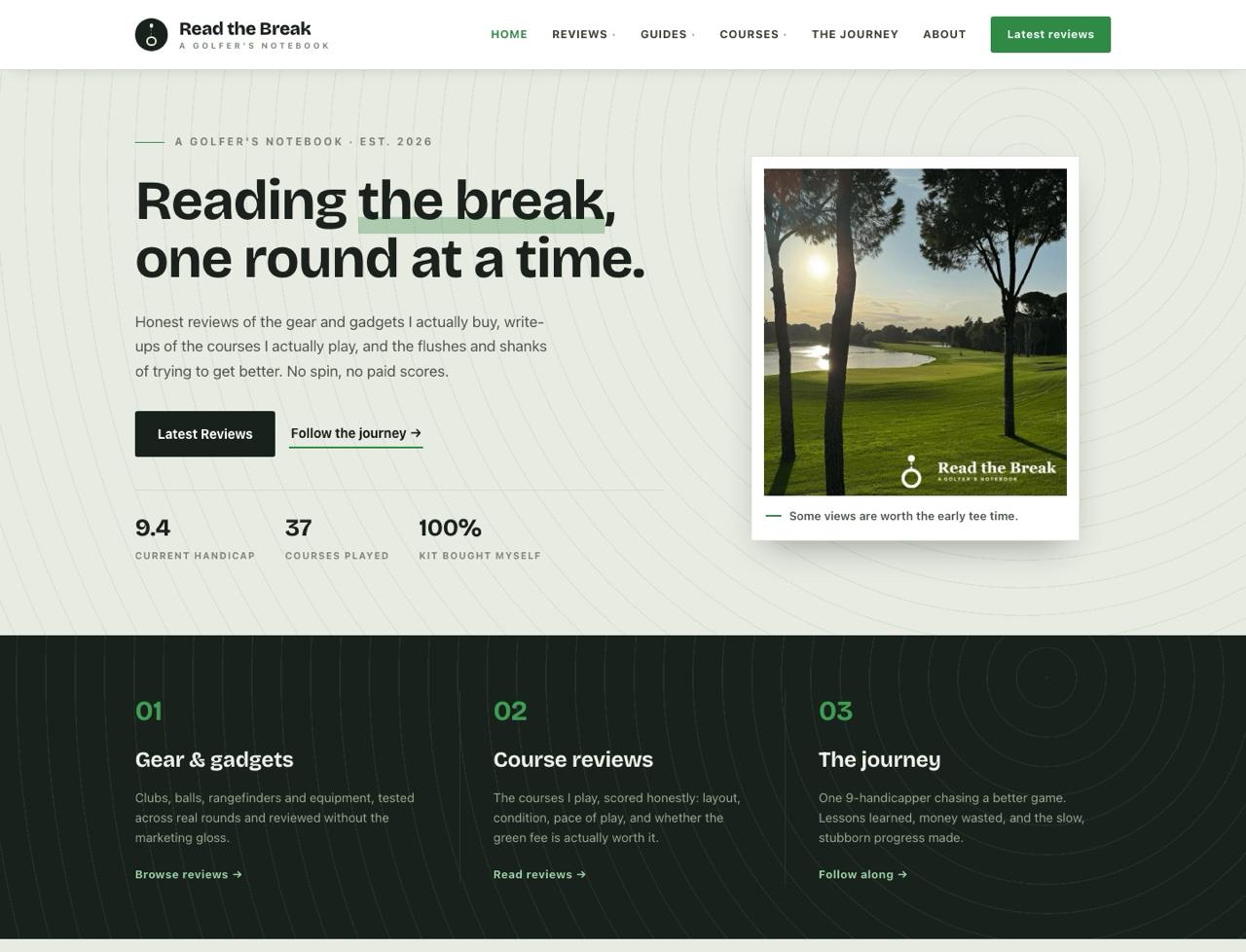
Read the Break is a UK golf site we built from a blank page to 91 pages in five months. One golfer, a day job, two kids, and evenings. The build is why that was possible.
Visit Read the Break91 pages
Built and published in five months
£0
Spent on ads, links or outreach
Top 10
On its core review terms, from a standing start
The idea
Small publishers do not die of bad writing. They die of the admin around it.
The thing that kills a one-person site is the twenty minutes of admin between finishing a piece and it being live and linked from everywhere it should be. Do that twice a week around a job and two kids, and you stop. So we built the admin out of it. The system makes the writing the only job left, which is the only job a human should be doing anyway.
See it live at readthebreak.co.ukContent is data
Every review, course and guide is an entry in a data file. Writing a review is writing the review, nothing else.
Everything self-updates
Publish one review and it appears on the brand hub, the category, the homepage, the sitemap and the related rail. Nobody touches six files.
Structured data, automatic
Product, Review, Rating, FAQ and GolfCourse markup generate from the same content. 327 questions and answers, none hand-coded.
Compliant by default
Every outbound retail link gets rel="sponsored" from the component, not remembered by a human at eleven at night.
One flag runs the season
The Christmas guide drops in and out of the nav, the homepage and every related review from a single line.
Built to be picked up
A bad week changes nothing. The site keeps ranking and converting, and is instant to resume.
The Challenge
Credibility, resilience, and revenue that does not nag.
Golf content online is mostly written by people who have never held the club, so credibility had to be structural rather than claimed. A score with four subscores on every review, a disclosure block on every page, and a visible note wherever something had not been properly tested. The homepage leads with "100% kit bought myself" because the site can back it up.
It also had to survive a bad week. A site run by one person around a job will have weeks where nothing gets written, so it needed to keep working, keep ranking and keep converting without anyone touching it, and be instant to pick back up.
And it had to earn money without reading like it wanted to. Affiliate revenue was the point, but a page that pushes a buy button at every opportunity stops being trusted, and an untrusted page sells nothing anyway.
"Build it so the only thing left to do is the thing only a human can do."
The brief, in one line.
About the project
Project
Read the Break
Sector
Golf media · Affiliate publishing · UK
Live
2026 · Published and ranking
Delivered
- Data-driven content system
- Full front-end build
- Structured data and SEO
- Affiliate architecture
Live site
readthebreak.co.uk
The Build
The content model is what paid for itself.
Static Gatsby on Netlify. Pages that load instantly on a car-park 4G signal, hosting that costs almost nothing, and nothing to patch.
The time went into the content model, and here is the practical test. Adding brand hub pages for Titleist, TaylorMade and Bushnell, three pages that each pull in their own reviews, scores and averages, took an afternoon. On a conventional CMS build that is a fortnight and a developer. Because content is data and the layouts are shared components, the site gets broader and deeper without getting slower to run.
The result is a clean technical base that stays clean on its own: zero broken internal links, zero missing images, alt text on every image, every meta description inside 160 characters, and every affiliate link compliant, all enforced by the system rather than remembered by a person.
91
Pages, including 26 gear reviews, 26 course reviews, 4 buying guides and 3 brand hubs
~156,000
Words, all original, all first-hand
327
FAQ answers marked up for rich results and AI retrieval
On the page
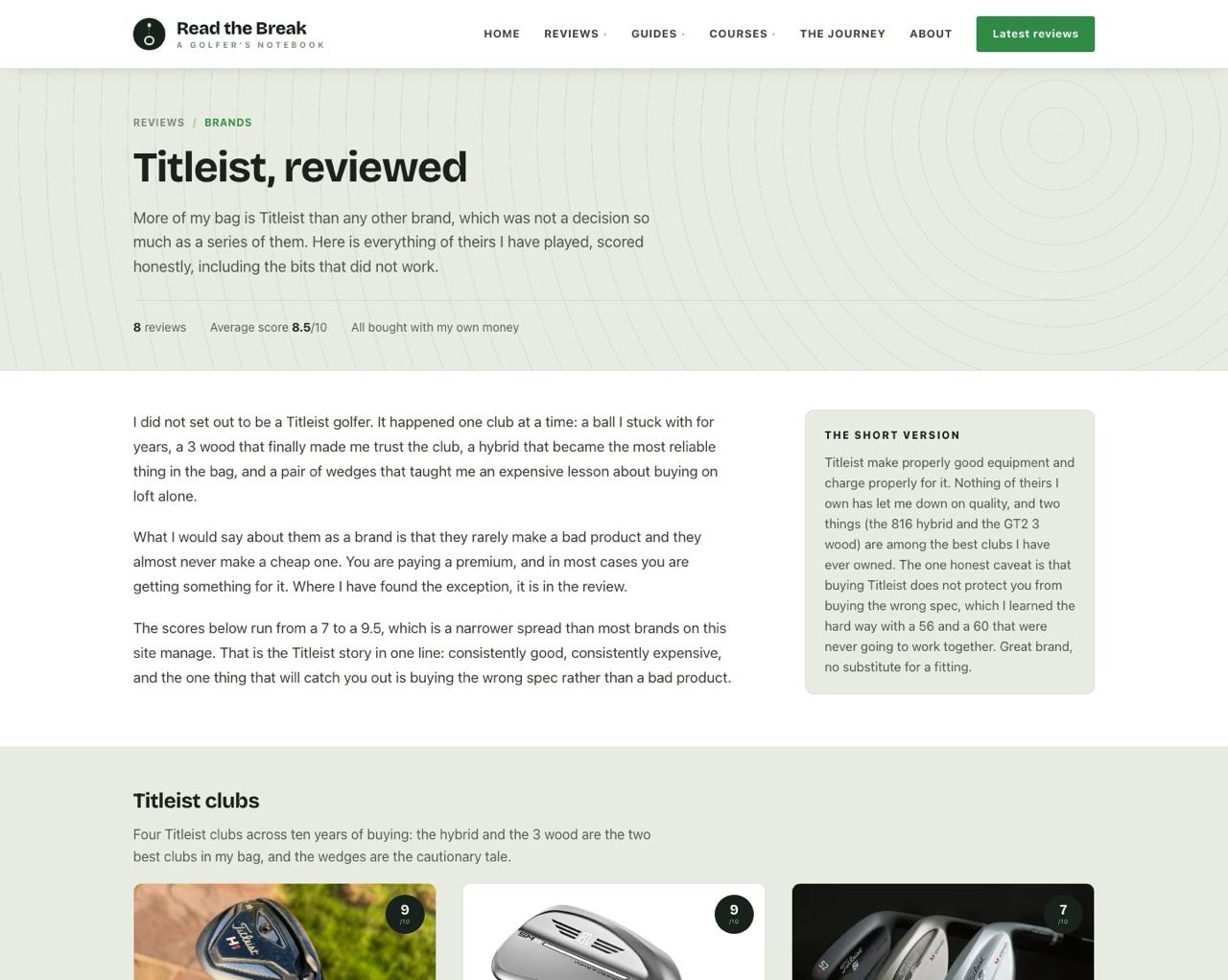
Brand hubs answer a question people genuinely type. Every Titleist review in one place, with the average score and an honest verdict, including the bits that did not work. The hub derives its review list from the review data, so it is never out of date.
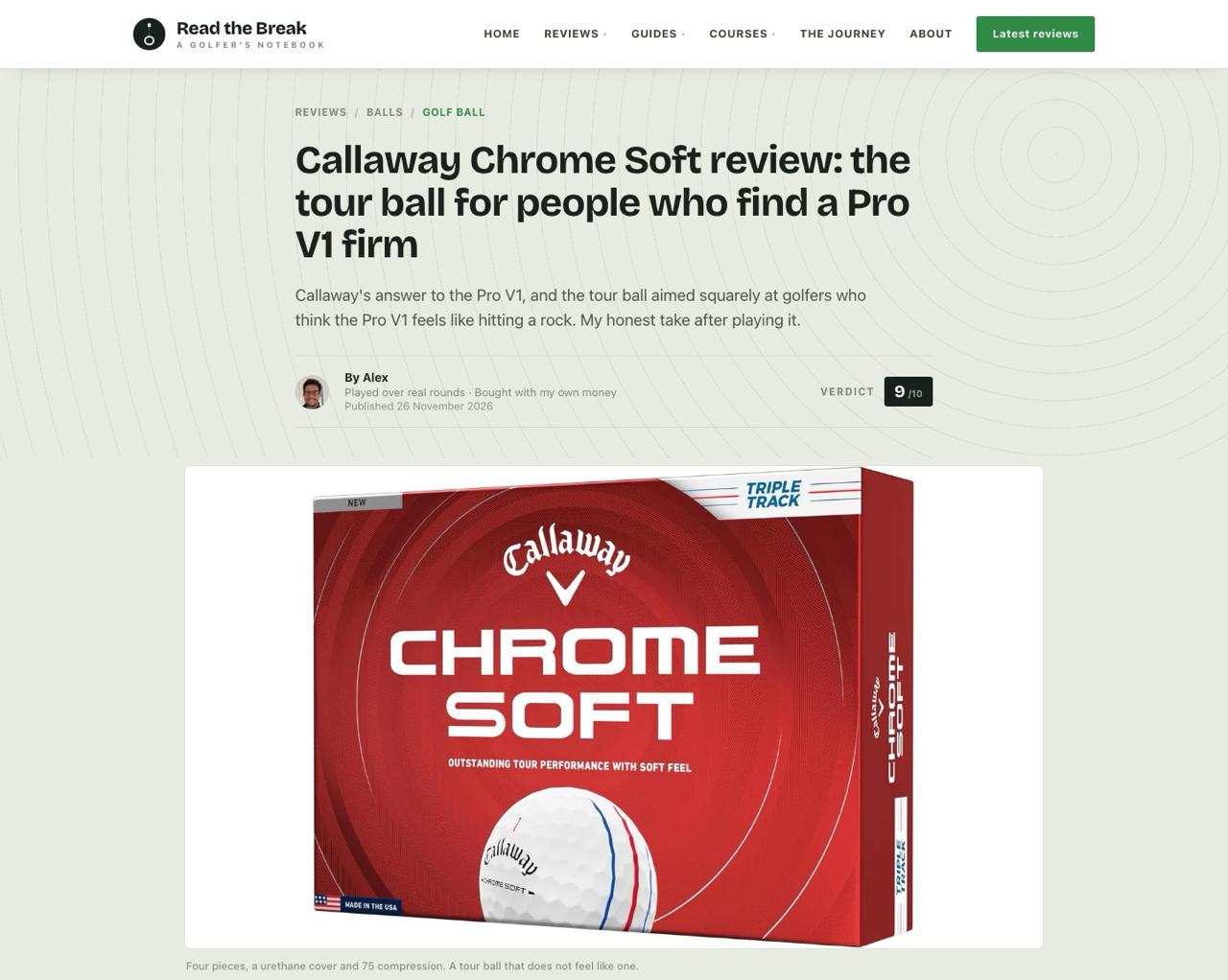
Guides that sell without shouting
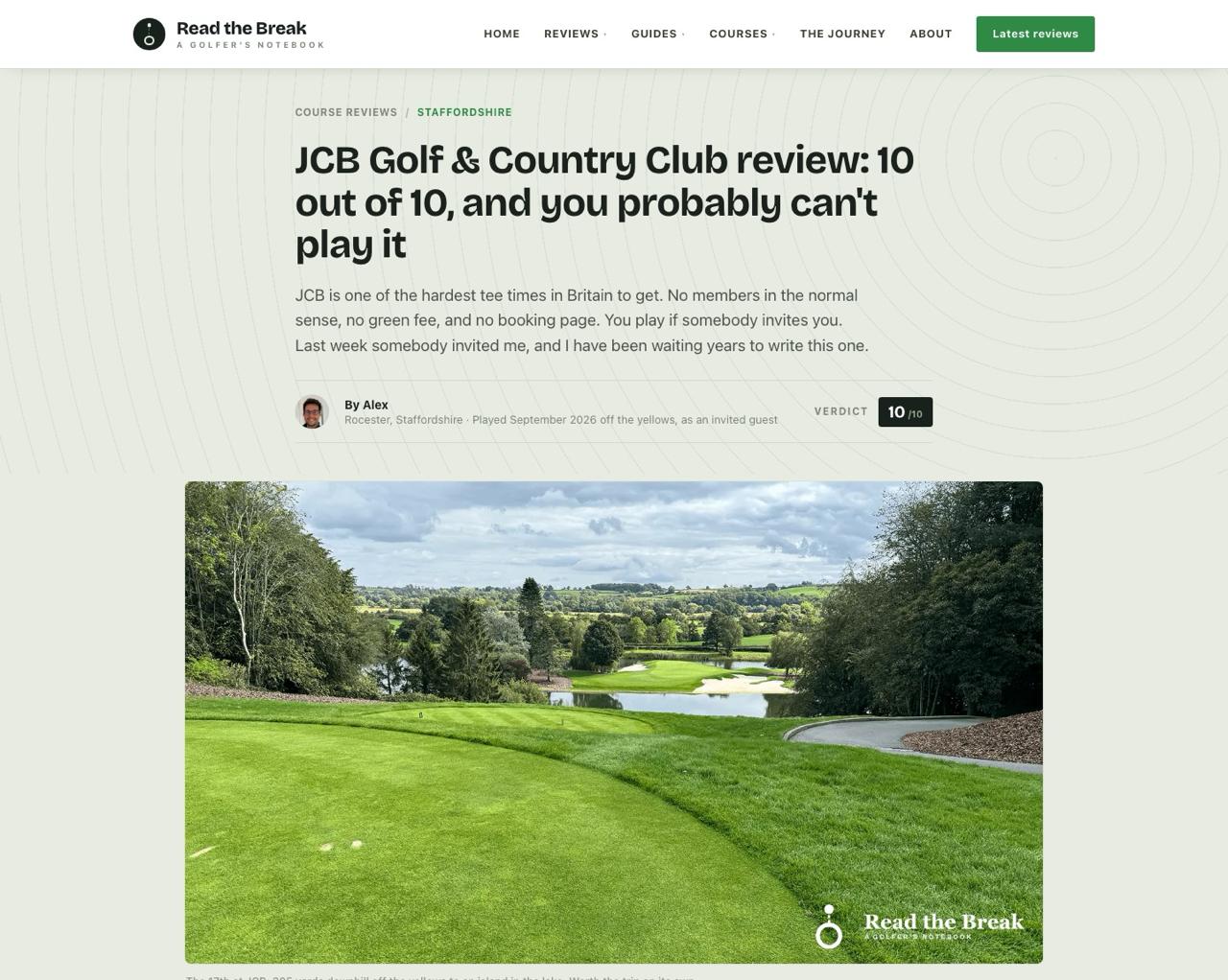
Every buying guide opens with a comparison table that builds itself from the picks on the page, so the table and the article can never disagree. Each guide links to the full review of a product before it links to a retailer, and where something is not worth buying there is no buy button at all.
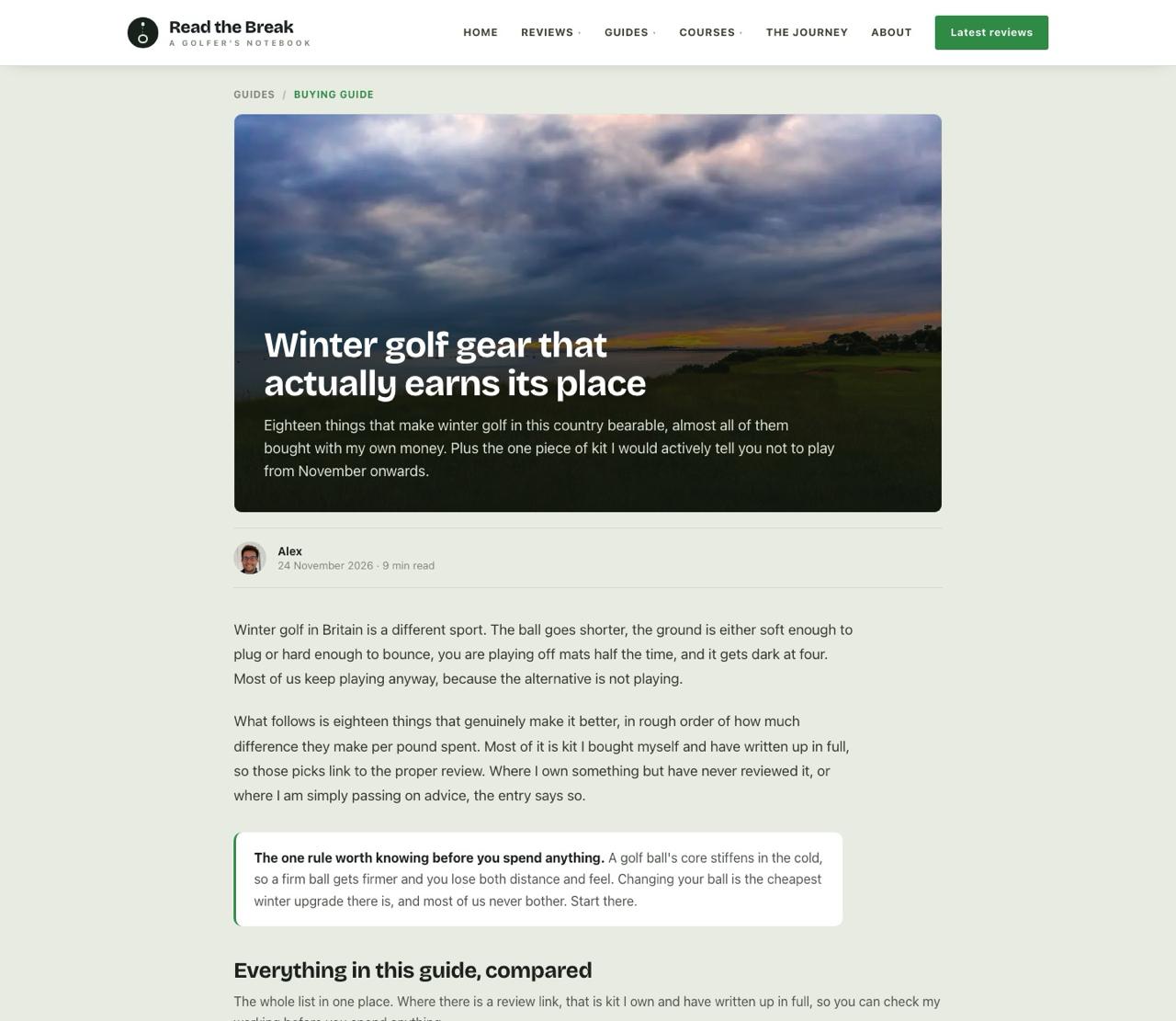
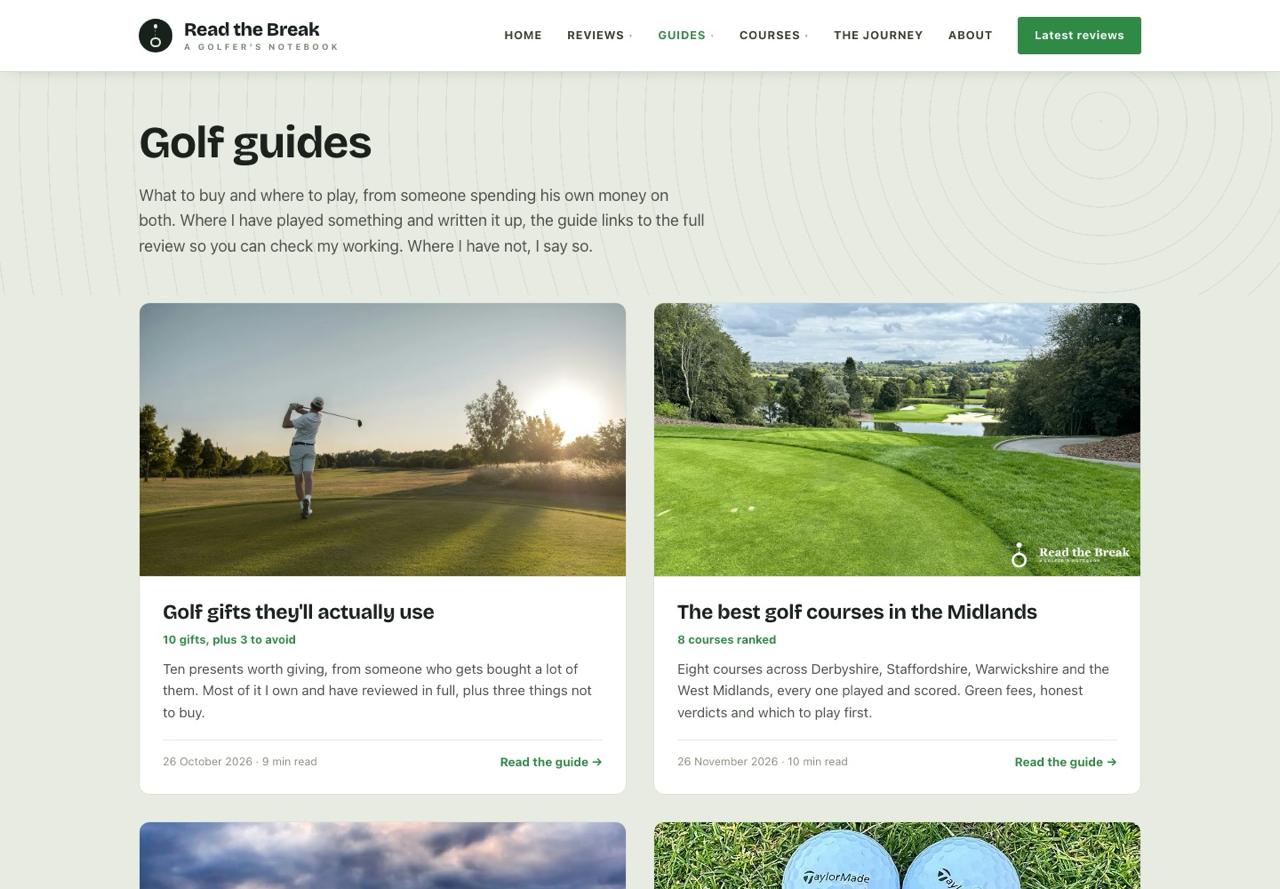
The Operating Model
Let the data pick the work.
This is the part we would actually take to a client.
Once a month the site's Search Console data gets read properly, and what it says decides what gets written next. Not a content calendar drawn up in advance, not a keyword list bought from a tool. The export.
The most recent example came straight out of an export showing hundreds of impressions landing on pages that could not convert them: a region with seven existing reviews and no page tying them together. That gap was found on a Wednesday and filled the same day. That loop is only possible because publishing is frictionless, which is the whole point of the build. Velocity is an engineering decision, not a staffing one.
What the numbers say, five months in
22,916
Search impressions in five months, with zero paid
+47% / +66%
Clicks and impressions, last 28 days versus the previous 28
Position 7.7
Best-performing review, from a standing start
Pages published
91
Words published
~156,000
Pages earning search impressions
94
Search impressions
22,916
Growth, last 28 days vs previous 28
+47% clicks, +66% impressions
Best performing review
Position 7.7
Spent on ads, links or outreach
£0
The number we care about most is the last one. Every impression on this site was earned by a page being the best answer to a question, with no budget, no outreach and no link building.
Insights
Latest insights.
Topical thinking on web development, SEO, paid media and AI adoption.

I'm in!
Where do I start?
Let's map out your digital inventory, eliminate bottlenecks, and build a scalable ecosystem designed for long-term growth.
Next Case Study
Hosted Rounds